Born of Xiangtan, Hunan
Hunan's lakes feed the finest tribute lotus in China. From this blessed water comes the pearl lotus — plump, round, and named for its remarkable size.
The filling is the soul of a premium mooncake, and the kernel is the soul of the filling. This guide distils what Southeast Asian paste factories actually need to specify when buying Xiangtan lotus seeds — grades, yields, SO2 and moisture limits, container loading and the QC checklist that prevents claims.
Lotus paste quality starts with the kernel. Xiangtan (Hunan) lotus seeds — the GI-protected 'xianglian' — have a naturally higher starch content and thinner seed coat than most Vietnamese or Fujian alternatives. For paste manufacturers this translates into three measurable advantages: higher paste yield per kilogram, a whiter paste colour without bleaching agents, and a cleaner, nuttier aroma after boiling.
Buyers in Malaysia, Singapore and Indonesia who switched from mixed-origin lots to pure Xiangtan lots typically report 3–8% higher paste yield and noticeably fewer off-colour specks in the finished filling — a difference that shows up directly in the appearance of premium mooncakes.
A practical planning benchmark for kernel-to-paste conversion:
Sulphur treatment is the single most common compliance failure in lotus seed imports. Fumigated seeds can show SO2 residues far aboveCodex and ASEAN limits, and regulators in Singapore (SFA), Malaysia (FSQD) and Indonesia (BPOM) all test filling ingredients. We ship sulphur-free processed lots with batch COA showing SO2 typically ≤ 30 mg/kg — comfortably inside every major market's limit for dried seeds.
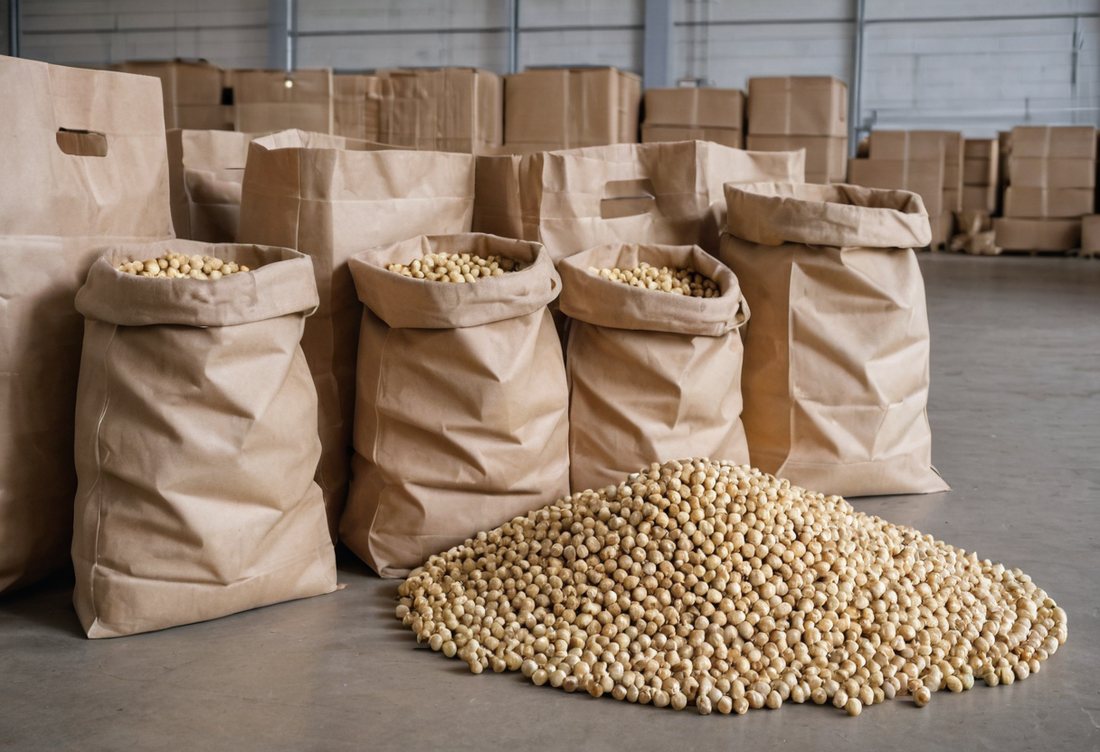
Fill factories should specify moisture ≤ 12.5% and insist on 25 kg woven bags with an inner PE liner. At 14%+ moisture, a 30-day sea voyage to Southeast Asia during monsoon months invites mould and free-fatty-acid development. Our pre-shipment inspection includes moisture verification per pallet, not per container average.
Two enquiries for the same 'white lotus seeds' can differ by 15–20% in price. The cost base is driven by: grade (whole vs split), core-removed vs core-in, polishing level, moisture spec, packing style, and order volume. Getting a precise quotation requires a specification sheet — see our guide on COA and specification sheets for the exact fields to fill in.
Send your target grade, monthly volume, destination port and packaging preference to our inquiry form. We ship a free 2 kg evaluation sample with COA and specification sheet, and return an FOB or CIF quotation within 24 hours. For mooncake-season planning, see the seasonal note in our MOQ and pricing guide.
Get a quotation and free 2 kg sample
Send your grade, quantity and destination port — we reply within 24 hours.
Inquire now →