Lotus Seed HS Codes and Customs Classification: Getting It Right First Time
The HS code is the least discussed and most consequential line in a shipping document. It sets the duty rate, decides which authority inspects you, and in some markets determines whether your product is admitted at all. It is also, routinely, copied from a previous invoice by someone who had no reason to look at it carefully. That habit is cheap until it is not.
Key takeaways
- 1.Classification follows the goods, not the invoice. The same product can fall in different headings depending on processing and presentation.
- 2.Dried lotus seed is a plant product with a food use — both phytosanitary and food-safety regimes may apply, depending on destination.
- 3.Your destination customs broker's ruling outweighs any code found online, including in this article.
- 4.Keep a written classification rationale on file — it is the only defence if a code is later challenged.
- 5.Consistency across shipments matters: changing codes without a reason is the fastest way to attract a review.
Why this article will not give you "the" code
Because there is no single correct code for all lotus seed movements. Classification depends on the state of the goods (dried, fresh, chilled, frozen; in shell or shelled; whole, split, ground), on the packaging and presentation (bulk ingredient versus retail-ready food preparation), and on the importing country's own tariff schedule, which subdivides the international HS at the six-digit level into national eight- and ten-digit lines.
Anyone who hands you a six-digit number and says 「use this」 is guessing at your product and your market. What this article can do is give you the reasoning framework, the questions to ask, and the documentation habit that survives an audit.
Note: Ask your importer of record or a licensed customs broker in the destination market for a written classification opinion before the first shipment. It costs far less than a reclassification after arrival.
The two classification axes that actually matter
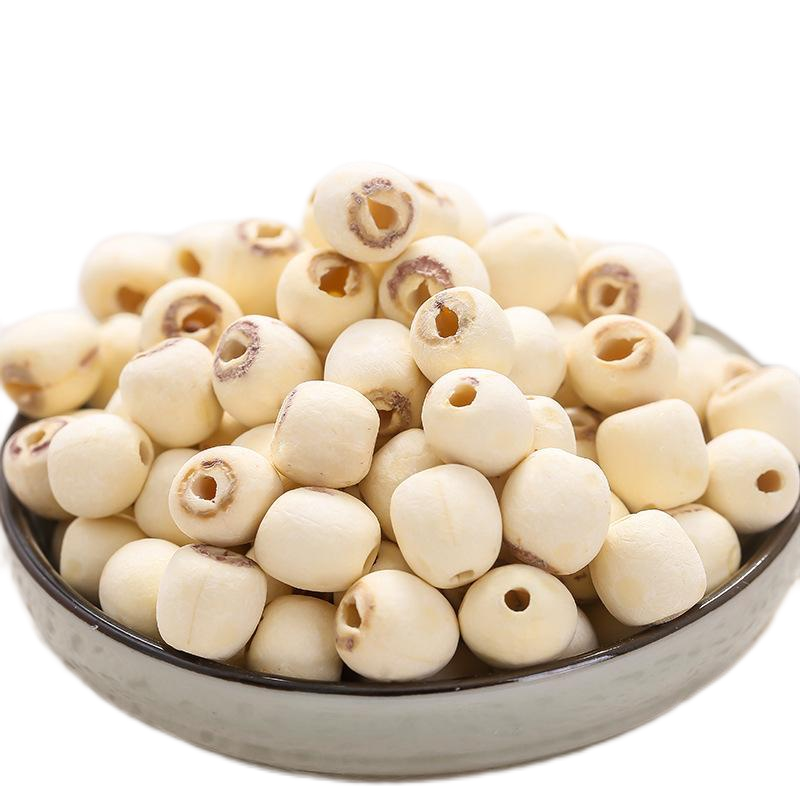
Axis one is processing state. A dried, shelled lotus kernel sold as an ingredient for further manufacture is generally treated as a vegetable product / edible seed for food industry use. The same kernel, cooked, sweetened and packed in a retail can, becomes a prepared or preserved food — a different chapter, a different duty rate, and often a different inspection regime.
Axis two is presentation. Bulk 25 kg bags of an ingredient and 200 g retail pouches of a finished snack do not always classify the same way, and retail packaging triggers labelling law that bulk ingredients escape. This is the axis most sellers get wrong, because they think of the product and not of how it is presented at the border.
| Goods as shipped | Classification question to resolve | Typical consequence |
|---|---|---|
| Dried, shelled, whole kernel, bulk | Vegetable product vs edible seed heading; national subheading | Usually lowest duty band; phytosanitary certificate often required |
| Dried, split or ground | Whether grinding changes the heading in your tariff | May attract different food-safety testing |
| Canned sweetened lotus in syrup | Prepared/preserved food chapter; added sugar content | Higher duty; full food labelling; possibly quota or licence |
| Lotus paste / filling, bulk | Prepared food vs ingredient; sugar and oil content | Different chapter from the raw seed; check sugar thresholds |
The regimes that ride along with the code
A classification decision does not sit alone. In most markets it selects which of several regimes apply: whether a phytosanitary certificate is needed and whether the exporting region must be registered for that commodity; whether the establishment needs food-facility registration; which residue and contaminant tests are triggered; and what labelling rules apply.
This is why the same product can clear smoothly into one country and stall in another with identical paperwork. The paperwork is not identical in effect, because the regimes behind it differ.
- ·Phytosanitary: is dried lotus seed treated as a plant product requiring a certificate, and is the growing region registered?
- ·Food facility registration: does the factory need to be registered with the destination food authority before shipping?
- ·Contaminants: which mycotoxin, pesticide and sulphur dioxide limits attach to this classification?
- ·Labelling: bulk ingredient exemption or full retail label with allergen, origin and nutrition panels?
The documentation habit that survives an audit
- 1Write a one-page classification memo per product and per market: what the goods are, which heading was considered and rejected, which was chosen, and why.
- 2Keep the broker's written opinion, the product specification and a photograph of the actual pack together in the same file.
- 3Do not change codes between shipments without a documented reason. Unexplained variation is a red flag in any risk system.
- 4Align the commercial invoice, packing list, bill of lading and certificate of origin on the description — a code that contradicts the description invites scrutiny of both.
- 5If a shipment is reclassified, do not quietly adopt the new code. Ask for the reasoning in writing; it may be right, and it may also be a clerk's shortcut.
Where sellers lose money on this
Three recurring patterns. First, under-declaring value to reduce duty — which is a different and much more serious matter than misclassification, and not something any legitimate supplier should entertain. Second, using a code from a competitor's invoice without checking whether the goods are actually the same. Third, letting the freight forwarder fill in the code because the field was blank, which is how a canned product ends up declared as a raw seed.
The economic argument for getting it right is not the duty saving. It is the cost of a hold: demurrage, storage, missed delivery windows, and the customer relationship. A held container usually costs more than the entire duty on the shipment.
Note: Duty rates, tariff schedules and inspection regimes change with trade policy. Verify against the destination customs authority's current schedule, and re-verify whenever a trade measure is announced.
Grades, limits, tax treatment and inspection regimes change without notice. Confirm the current position for your product, origin and destination with your importer or the relevant authority before contracting — treat everything here as a starting point for verification.
Frequently asked questions
QCan I use the same HS code for round, drilled and split lotus seed?
QWho is responsible if the code is wrong?
QDoes a certificate of origin change the HS code?
QWhat if my buyer insists on a specific code I think is wrong?
Products referenced in this guide
Continue reading

Need this turned into a quotation?
Send the destination market, the end product and the volume. You get back a grade specification, a testing plan and a document list — the same three things this article told you to ask for.
Request a quote