Xiangtan Terroir: Why Hunan Grows the Lotus Seed Buyers Ask For
Origin stories are usually marketing. In lotus seed they are partly agronomy: a seed's size, whiteness and cooking behaviour are shaped by water depth, temperature during grain fill, and how long the crop sits in the field before harvest. Xiangtan's geography sets all three. That is why "Hunan origin" survives as a purchasing criterion even in a market where cheaper seed is always available.
Key takeaways
- 1.Xiangtan sits in central-eastern Hunan on the lower Xiangjiang, with a humid climate, four distinct seasons and a mean annual temperature around 17°C.
- 2.The planting calendar is tight: deep ploughing in mid-to-late March, transplanting around Qingming, harvest in September.
- 3.Seed lotus roots are selected for 2–3 intact nodes, unbroken shoots, no lesions and no serious mechanical damage — a quality gate before planting, not after harvest.
- 4.Harvest timing differs by product form: through-core lotus is picked while the shell is not yet hard; the other four forms are picked at full ripeness.
- 5."Hunan origin" is a claim you should verify with lot records — the variety grown across southern China is often the same one.
The physical setting
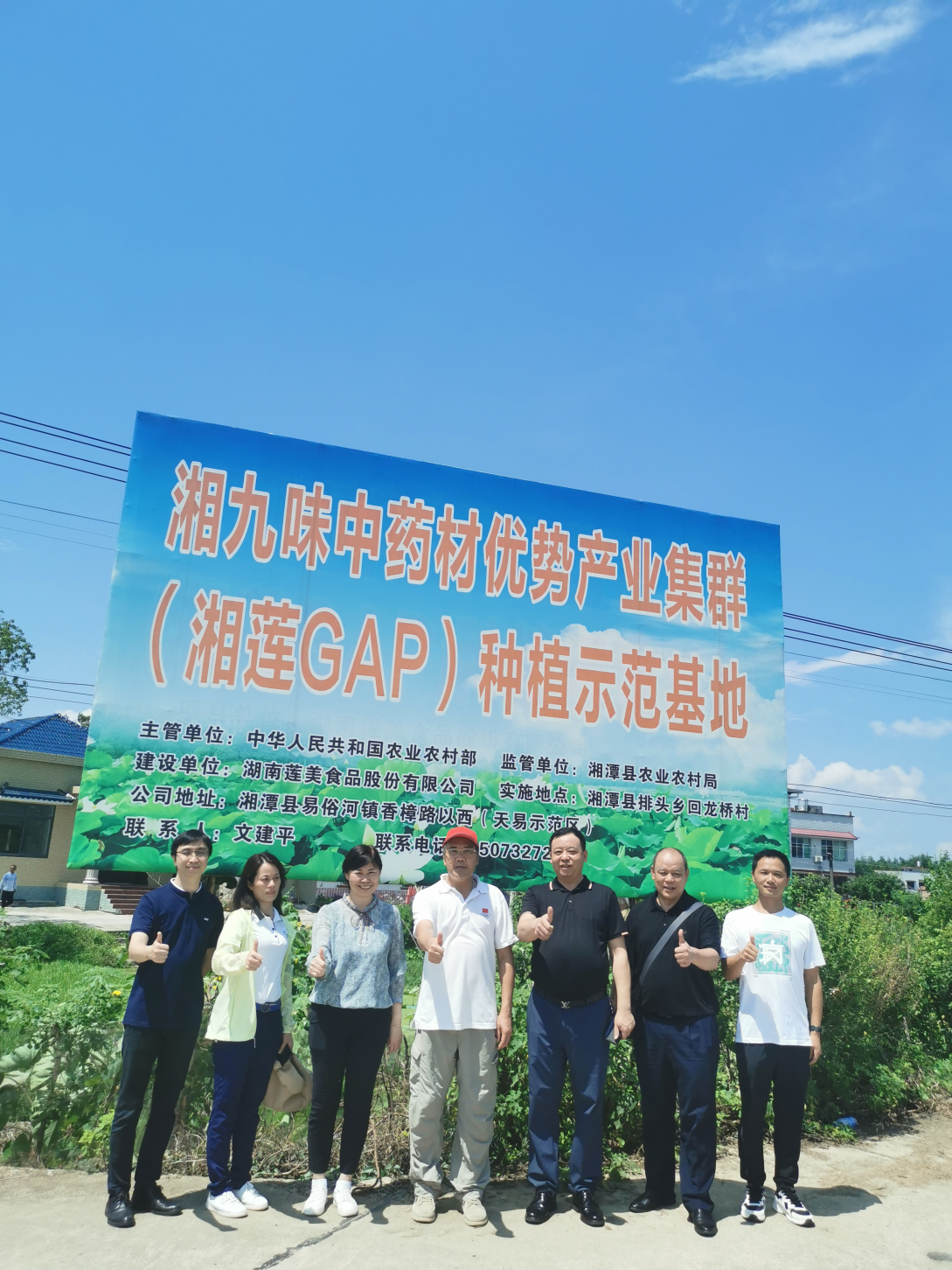
Xiangtan lies in central-eastern Hunan on the lower reaches of the Xiangjiang River. The municipal government's own description of the growing conditions is concise: a humid climate, four clearly separated seasons, an annual mean temperature of about 17°C, abundant sunshine and plentiful rainfall. Those four variables — humidity, seasonality, accumulated heat and water — are the whole of the terroir argument.
What each does: seasonality forces the plant through a real dormancy so the rhizome stores reserves; accumulated heat during grain fill drives seed size; rainfall and river-fed irrigation keep the shallow paddy at the depth lotus wants; humidity moderates the desiccation stress that produces small, chalky seed. None of these is unique to Xiangtan, but the combination is favourable and, importantly, stable enough to plan a harvest calendar around.
The growing calendar, month by month
Xiangtan's documented practice is specific enough to plan around. Seed lotus roots are selected first — the requirement is material showing the true characteristics of Cun San Lian, Furong Lian or Taikong Lian, with two to three intact nodes, unbroken shoots, no disease lesions, no serious mechanical injury and vigorous growth. Fields are deep-ploughed in mid-to-late March. Transplanting happens around the Qingming festival, which falls in early April. Harvest runs through September.
For a buyer, the calendar has one immediate consequence: new-crop material starts becoming available from late September, and the quality of what you buy in, say, March depends entirely on how it was stored over winter. Ask about cold storage, not just harvest year.
| Period | Field operation | What it determines for the buyer |
|---|---|---|
| Before March | Seed rhizome selection and storage | Whether the crop carries the declared variety traits at all |
| Mid-to-late March | Deep ploughing of the paddy | Root-zone condition; affects vigour and disease pressure |
| Around Qingming (early April) | Transplanting | Sets the harvest window five months later |
| May–August | Water management, weeding, disease control | Grain fill and seed size; the main quality variable |
| September | Harvest, by product form | Shell hardness at picking decides which forms are even possible |
Harvest timing is a product decision, not a farm decision
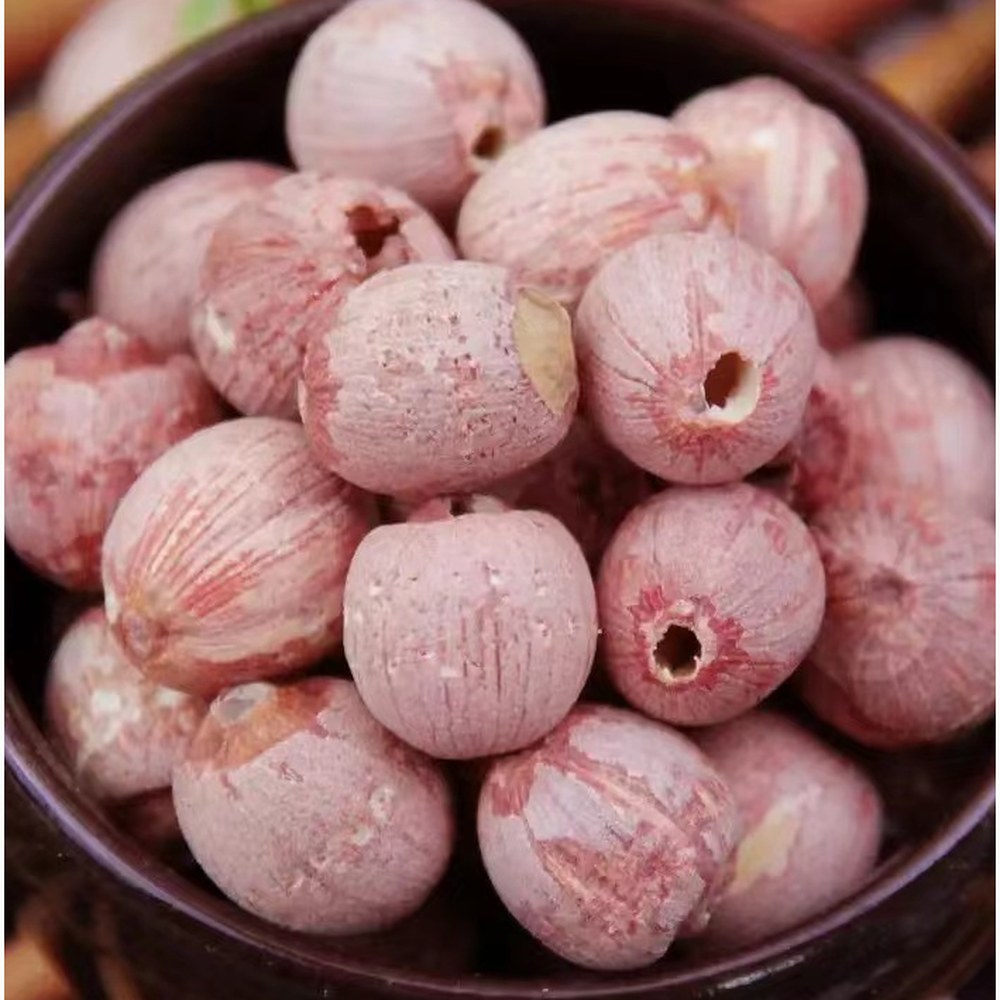
This is the part of the origin story most buyers never hear. For hand-processed through-core lotus, the seeds must be taken while the kernel is full but the shell not yet hard — the shell shows purplish-brown or yellowish-brown — because that is the only window in which the shell can be opened cleanly by hand. For round-grain, drilled, polished-white and split forms, the seeds are taken at full ripeness, and the picked heads are spread on clean dedicated bamboo mats to sun-dry in fine weather.
Practically: a factory promising both through-core and split grades from the same field in the same week is either buying from multiple farms or being loose with the words. Both happen. The question to ask is which harvest window each grade came from.
Note: Sun-drying on bamboo mats is a quality signal in its own right. Mechanical hot-air drying is faster and more consistent but changes the surface appearance of polished white grades.
Why Xiangtan became the trading centre, not just a farm
Geography did something else. Xiangtan County is not only the largest planting base but also the largest trading and logistics hub and the largest export base for the product. The three professional markets — Huashi, Zhonglupu and Yisuhe — handle an estimated 80,000 to 100,000 tonnes a year, roughly 80 percent of national sales. Huashi alone hosts over a thousand lotus trading businesses.
That concentration has a buyer-side meaning that is easy to miss: product moving through Huashi is not necessarily grown in Xiangtan. The market aggregates material from Hubei, Jiangxi, Anhui and beyond, sorts it, and re-exports it. Origin and market are two different things, and only one of them is controlled by the GI rules.
How to verify Hunan origin without flying there
- 1Ask for the production address on the business licence and cross-check it against the 34 GI townships.
- 2Ask for the factory's purchase records for the crop year — how much green seed came in, from which counties, in which month.
- 3Compare incoming volume with outgoing volume. A factory shipping more than it plausibly bought is blending.
- 4Request photographs of the field and the harvest with metadata intact, not stock imagery from a brochure.
- 5On arrival, test what is testable: moisture, broken-grain ratio, admixture, and cooking behaviour. Origin claims that do not survive a cook test were never real.
What terroir can and cannot explain
Terroir explains average grain size, average whiteness and the typical cooking behaviour of a region's crop. It does not explain a specific shipment's quality. A badly stored lot from the best field is worse than a well stored lot from an average one, and buyers who buy the story rather than the lot discover this at the worst possible moment.
The practical hierarchy: lot quality first, then processing form, then variety, then origin. Origin is the last filter, not the first — and it is worth paying for only after the first three are settled.
Grades, limits, tax treatment and inspection regimes change without notice. Confirm the current position for your product, origin and destination with your importer or the relevant authority before contracting — treat everything here as a starting point for verification.
Frequently asked questions
QIs all lotus seed sold in Xiangtan grown in Xiangtan?
QDoes the 17°C mean temperature matter to quality?
QWhen is new-crop lotus seed available?
QWhy do some batches from the same region look different?
Products referenced in this guide
Continue reading
Need this turned into a quotation?
Send the destination market, the end product and the volume. You get back a grade specification, a testing plan and a document list — the same three things this article told you to ask for.
Request a quote